Fatty Liver Disease: Causes, Types and Symptoms
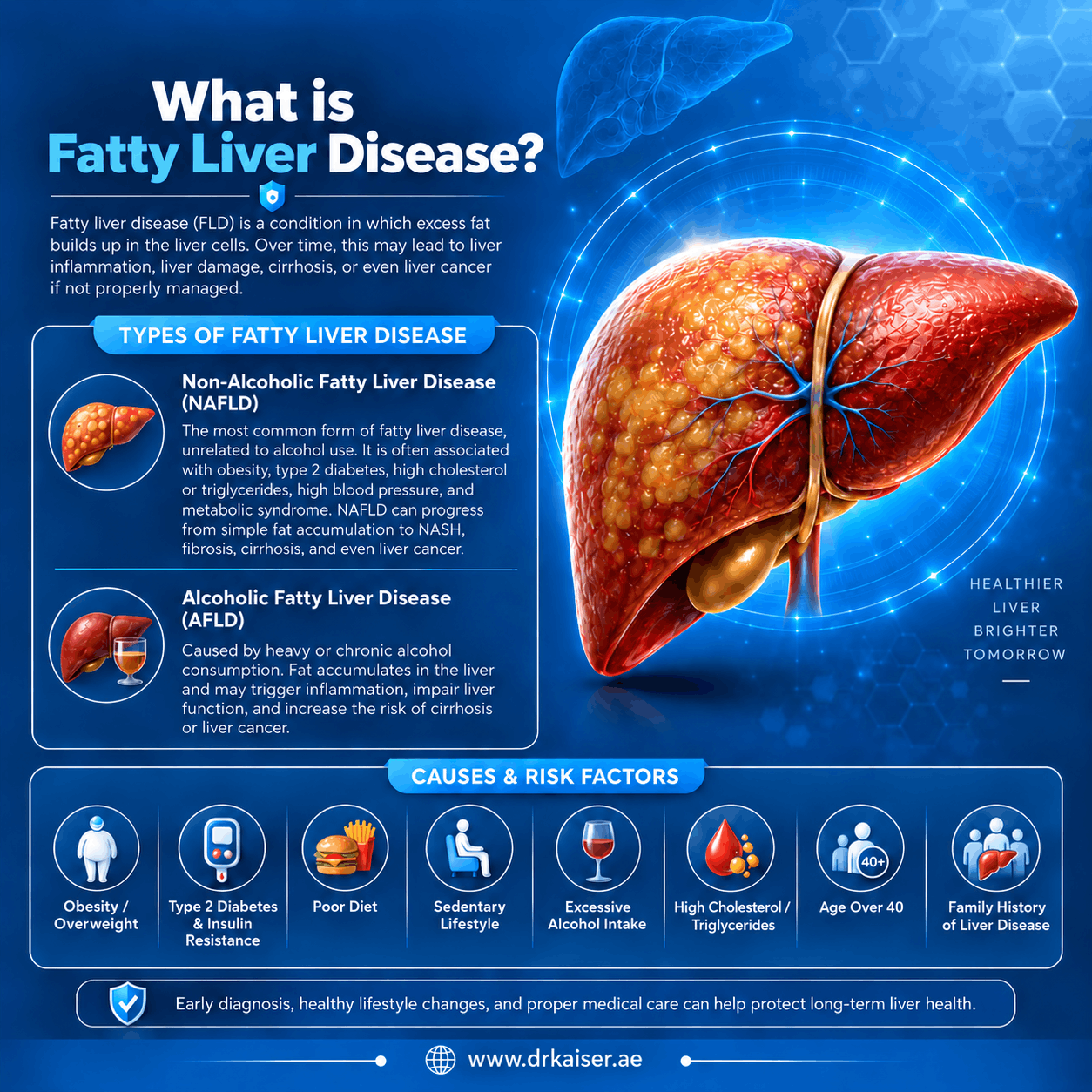
Fatty liver disease occurs when excess fat builds up in the liver cells. Over time, this may cause inflammation, liver damage, fibrosis or cirrhosis if not properly managed.
The two main types are:
🔹 Non-Alcoholic Fatty Liver Disease (NAFLD)
Often associated with obesity, type 2 diabetes, insulin resistance, high cholesterol and metabolic syndrome.
🔹 Alcoholic Fatty Liver Disease (AFLD)
Caused by excessive or prolonged alcohol consumption, which can affect liver function and increase the risk of serious liver damage.
Common risk factors include:
• Being overweight or obese
• Type 2 diabetes
• High cholesterol or triglycerides
• Diets high in sugar, unhealthy fats and refined carbohydrates
• Physical inactivity
• Excessive alcohol consumption
• Family history of liver disease
Possible symptoms may include:
⚠️ Persistent fatigue
⚠️ Discomfort or pain in the upper-right abdomen
⚠️ Unexplained weight loss
⚠️ Swelling in the abdomen or legs
⚠️ Yellowing of the skin or eyes
⚠️ Dark urine
Fatty liver disease may not cause noticeable symptoms during its early stages. Regular health checks and timely medical evaluation can support early detection and help prevent complications.
🩺 Consult a qualified healthcare professional if you experience concerning symptoms or have risk factors for fatty liver disease.